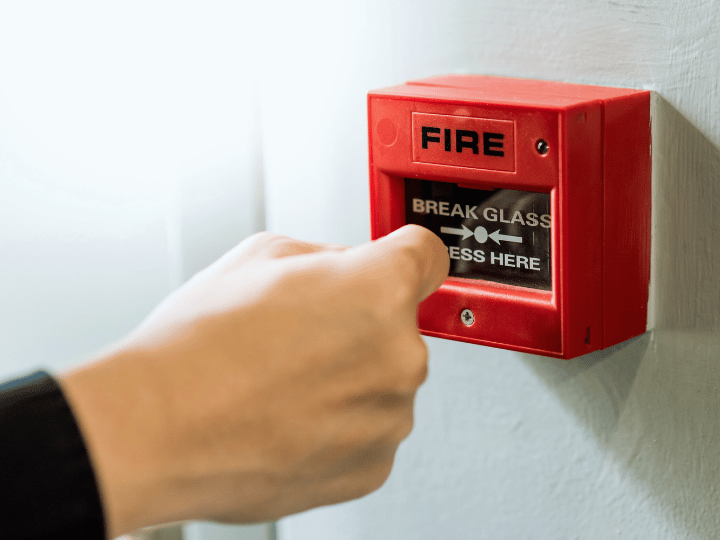
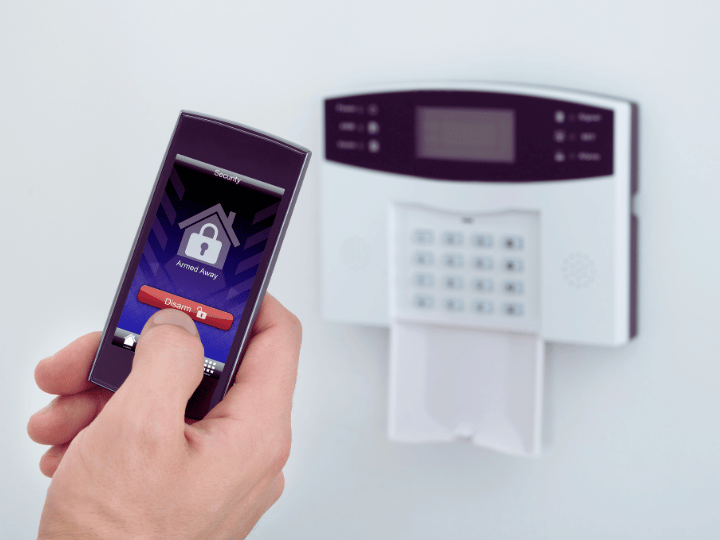
A fire alarm system that sounds inside an empty building at 3 a.m. and reaches no one is not protecting anything. That gap is exactly what commercial fire alarm monitoring closes. Setting up commercial fire alarm monitoring in New Haven connects a building's fire alarm control panel to a central station staffed around the clock, so a smoke detector or pull station that activates after hours triggers an immediate call to the fire department rather than sounding into a locked, empty office park off the Long Wharf corridor. For a facility manager weighing how to protect a commercial property when nobody is on site, fire alarm monitoring is the difference between a system that detects a fire and a system that actually gets help dispatched.
Fire alarm monitoring links the fire alarm control panel, the central hub that receives every signal from the building's detectors and pull stations, to an off-site central station monitoring center through a supervised communication path. When a detector activates, the panel transmits that signal to the monitoring center, where operators confirm the alarm type and notify the New Haven fire department without waiting for anyone inside the building to place a call. The same path carries trouble and supervisory signals, meaning the monitoring center also learns when a system develops a fault, loses utility power, or has a device drop offline, not just when it goes into full alarm.
This distinction matters for commercial buildings specifically. A local fire alarm system with horns and strobes warns people who are physically present, but a New Haven warehouse, machine shop, or downtown office after closing time has no one present to hear it. Fire alarm monitoring covers exactly those hours, which for most commercial properties are the majority of the week. A building occupied forty hours a week is unoccupied for the other one hundred twenty-eight, and fire alarm monitoring is what protects the property during that larger stretch.
For many New Haven commercial buildings, fire alarm monitoring is not optional. The Connecticut State Fire Safety Code, enforced through the Office of the State Fire Marshal and locally by the New Haven fire marshal's office, requires central station monitoring for a wide range of commercial occupancy types, and NFPA 72, the National Fire Alarm and Signaling Code that sets the national standard for fire alarm systems, defines how that monitored connection has to be supervised and how quickly signals must transmit. A commercial building operating a fire alarm system without the required monitoring is exposed during any fire marshal inspection, and the exposure grows if the building's occupancy classification specifically mandates a monitored connection.
Insurance carriers apply their own pressure. A monitored fire alarm system routinely affects commercial property insurance rates, and some carriers require central station fire alarm monitoring as a condition of coverage for certain building types. A facility manager setting up fire alarm monitoring is often satisfying two masters at once, the fire marshal's code requirements and the insurance carrier's underwriting conditions, which is why monitoring gets treated as core infrastructure rather than an upgrade.
The reliability of fire alarm monitoring comes down to how the panel connects to the central station. Older commercial buildings across New Haven historically relied on twin phone lines running from the fire alarm control panel to the monitoring center, but traditional copper phone service has grown less reliable and more expensive as carriers move away from it. Modern commercial fire alarm monitoring more often uses a cellular communicator, a network connection, or both together as dual-path communication , where the system reports over a primary path and automatically fails over to a backup if the primary drops.
Dual-path communication matters because a single point of failure in the communication path defeats the entire purpose of monitoring. A building relying on one connection loses its monitored protection the moment that connection fails, and it may not even know until a signal fails to transmit during an actual event. NFPA 72 supervision requirements exist precisely to catch a failed communication path quickly, and a properly configured commercial fire alarm monitoring setup reports a communication fault to both the building and the monitoring center rather than letting it go unnoticed. DMP and Honeywell fire alarm control panels, both part of Mammoth Security's certified partner lineup, support the supervised dual-path communicators that make this level of reliability practical for a commercial installation.

With central station monitoring, an activated detector transmits to an off-site monitoring center where operators notify the fire department directly, which is what protects a commercial building during the many hours it sits unoccupied and no one is present to hear the horns.
A supervised monitored connection carries trouble and supervisory signals in addition to alarms, meaning the monitoring center also learns when a system develops a fault, loses utility power, or has a device drop offline, not only when it goes into full alarm.
A monitored fire alarm system relying on one connection loses its protection the moment that path fails, which is why dual-path communication and NFPA 72 supervision requirements exist to detect and report a failed connection quickly rather than letting it go unnoticed until an actual event.
Setting up commercial fire alarm monitoring in New Haven starts with the panel already installed in the building. If the existing fire alarm control panel supports a monitored connection, setup involves adding or configuring the communicator, programming the panel to transmit the correct signals to the central station, and registering the account with the monitoring center so operators know which building, which contacts, and which fire department correspond to incoming signals. If the building runs an older conventional panel that cannot support a supervised communicator, setup may require upgrading to an addressable panel first, since fire alarm monitoring is only as good as the panel feeding it signals.
Account configuration is where a lot of monitoring value lives, and it is a step that gets shortchanged by providers who treat monitoring as a commodity. The monitoring center needs accurate call lists, correct zone descriptions so operators can tell the fire department which part of the building is reporting, and clear instructions for how to handle a trouble signal versus a full alarm. A commercial fire alarm monitoring setup where the zone descriptions are generic or the call list is outdated slows down the response when it matters, which is why Mammoth Security handles account configuration as a documented part of setup rather than an afterthought.
A fire alarm monitoring setup is not complete until someone confirms the full signal path works. That means putting the system into test mode with the monitoring center, activating a device, and verifying that the correct signal reaches the central station with the correct zone information attached. Skipping this step is how buildings end up with monitoring on paper that does not actually function, a device that reports to the wrong zone or a communicator that was never properly registered. Mammoth Security tests every monitored connection end to end during setup and documents the result, so the building has proof the monitoring works and the fire marshal's office has a record showing it was verified.
Fire alarm monitoring needs vary across the commercial buildings Mammoth Security serves in New Haven and the surrounding towns of Hamden, Branford, West Haven, and Milford. A retail storefront or restaurant with a small system needs straightforward monitoring that dispatches quickly when the building is closed overnight. An industrial or manufacturing site near the I-95 and I-91 interchange, running duct detectors tied into HVAC shutdown and a larger addressable system, needs monitoring configured to distinguish among many zones so the fire department knows exactly which part of a large building is involved before they arrive. Multi-family residential buildings and mixed-use properties carry the added weight of monitoring that protects sleeping occupants, where a fast dispatch from the central station monitoring center directly affects how quickly help reaches people who cannot see the alarm source themselves.
Government buildings and SAM-verified facilities operating under federal or Connecticut state funding bring an additional consideration when fire alarm monitoring connects into a broader integrated system that also includes cameras or access control. NDAA Section 889 restricts certain manufacturers, mainly in video surveillance, from federally funded installations, so a monitored setup that ties into an integrated platform on one of these properties needs any connected video or access components sourced from NDAA-compliant manufacturers like Avigilon, Axis, Hanwha Vision, ExacqVision, or Milestone. A privately held commercial building without federal or state funding keeps more flexibility on the connected video and access side, though the monitored fire alarm connection itself follows the same NFPA standards regardless of funding source.
Commercial buildings rarely run fire alarm monitoring in isolation. The same facility manager arranging fire alarm monitoring is often responsible for burglar and intrusion alarm monitoring, security cameras, and access control across the same property. Running all of it through one integrated system connected to one central station, rather than a fire alarm monitored by one company and a burglar alarm monitored by another, means one account relationship, one set of documentation, and one number to call when a signal needs investigating. Mammoth Security provides 24/7 central station monitoring for both fire and burglar and intrusion systems, which lets a New Haven commercial property consolidate its monitored protection under a single documented relationship instead of juggling separate vendors who each know only part of the building.
This integration also supports visual verification, where a monitored alarm signal can be checked against camera footage before dispatch, reducing unnecessary fire department response to a confirmed non-event. For commercial properties concerned about the fines that come with repeated false dispatches under New Haven's alarm registration and false alarm reduction framework, integrated monitoring with visual verification is a practical way to reduce that exposure while keeping genuine alarms moving quickly to the fire department.
Fire alarm monitoring is not a set-and-forget arrangement. The monitored connection needs periodic testing to confirm it still transmits correctly, the account information needs updating whenever building contacts or tenants change, and the underlying fire alarm system still requires the inspection and testing cycle that NFPA 72 defines regardless of whether it is monitored. A monitored system with an out-of-date call list or an untested communicator carries a false sense of protection, which is why ongoing fire alarm monitoring service through Mammoth Security includes keeping the account current and confirming the communication path during scheduled service visits rather than assuming it still works.
A commercial property in New Haven that operates a fire alarm system without central station monitoring, or with monitoring that was set up years ago and never verified since, is carrying a gap that only becomes visible during an inspection or an actual fire. Mammoth Security offers a free security assessment for any New Haven commercial building that needs fire alarm monitoring set up, wants an existing monitored connection verified, or needs an aging panel upgraded to support a supervised communicator. Call (203) 747-8244 to arrange fire alarm monitoring handled by a licensed Connecticut integrator that configures the account correctly, tests the full signal path, and backs the monitored connection with the same 24/7 central station support that protects commercial properties across New Haven and statewide from four Connecticut locations.
Redirect to:
|
This page is a redirect. The following categories are used to track and monitor this redirect:
|